European offshore critical infrastructure protection

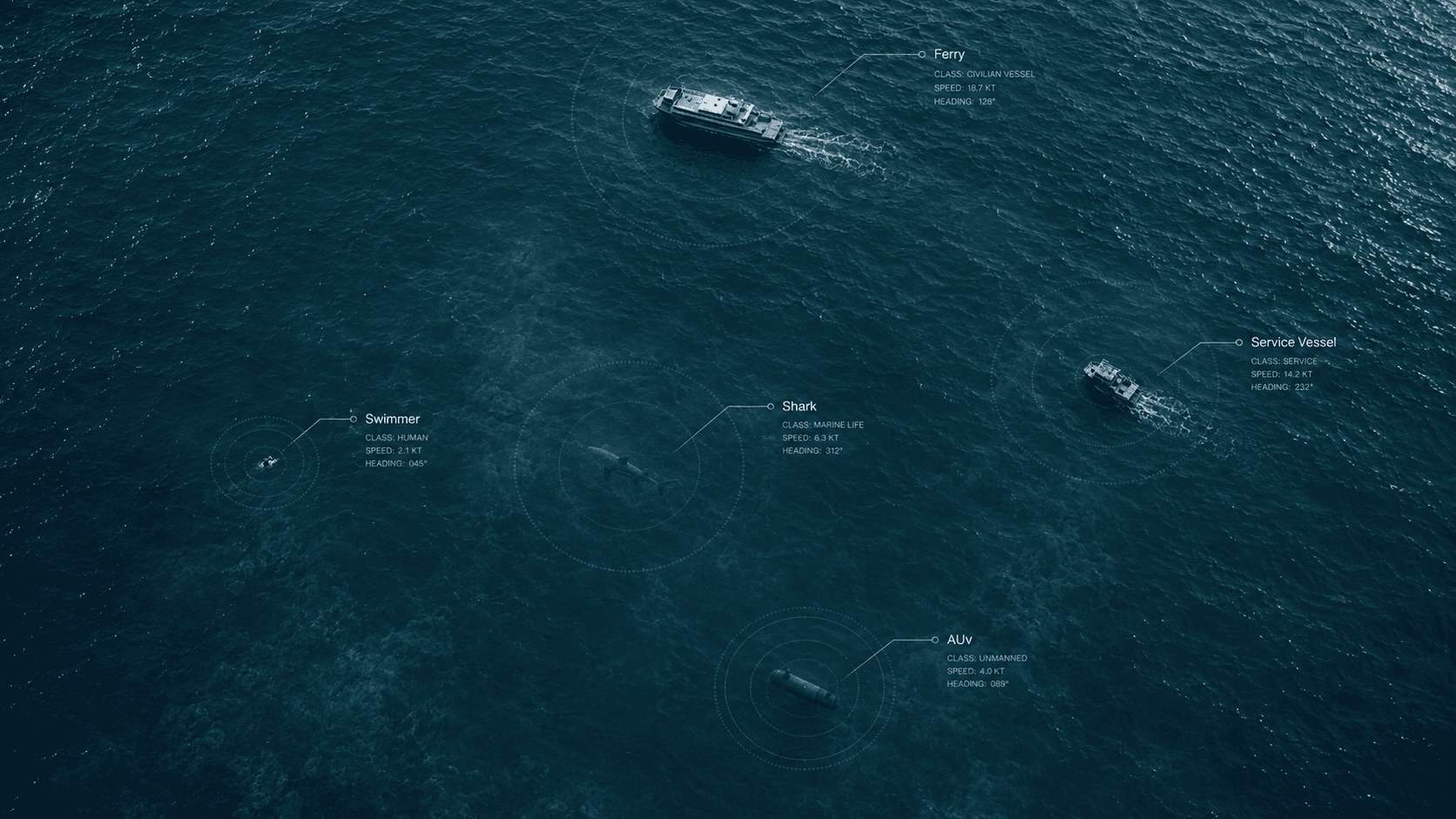
Detection, classification, and tracking of surface and subsurface threats to critical infrastructure and defence installations.

Solutions for detection, classification, and tracking of subsurface activities that pose a threat to critical infrastructure and defence

installations.

Scroll down

Built by professionals with experience from leading companies

Global maritime, critical infrastructure, and technology leaders

McKinsey & Company Logo

//

Introducing Gjallarhorn

Short-range subsea sensing for European critical infrastructure

  • Distributed Acoustic Sensing

    Today's distributed acoustic sensing solutions are built for long range, say 50-100 km. That is good, there are plenty of use cases for long-range DAS. However, this comes at the cost of reduced sensitivity, specifically low signal-to-noise ratio and inability to capture high-frequency signals. Gjallarhorn offers solutions for shorter ranges, from a few hundred meters up to around 5 km, which do not suffer from these shortcomings. Our short-range, high-sensitivity, cost-efficient solutions provide better detection, better classification, and better tracking of surface and subsurface threats near your critical infrastructure - faster, simpler, and at significantly lower cost.

  • AI-native classification and tracking

    Proprietary AI models turn high-frequency acoustic signals into real-time classification and tracking. Surface vessels, submarines, underwater drones, SCUBA divers, anchors, trawls, and other vehicles and activities can be distinguished by type, movement, and behaviour rather than appearing as undifferentiated acoustic events.

  • Proprietary fibers and deployment

    Today's long-range DAS implementations use whichever optical fibers have been installed inside the power cables, telecommunication cables, or other such infrastructure to be monitored. That is good, it is important to protect these assets. However, this comes at the cost of reduced sensitivity. The fiberse themselves have not been optimized for DAS, and the "wrapping" of fibers inside multiple thick layers of sound-insulating materials, often including cable armouring, strongly muffles sounds before they reach the fiber and can be detected. Gjallarhorn offers optical fibers optimized for DAS and deployment techniques that are quick and efficient, bringing down cost significantly.

Distributed acoustic sensing

Proprietary fibers and deployment

AI-native classification and tracking

Distributed acoustic sensing

Today's distributed acoustic sensing solutions are built for long range, say 50-100 km. That is good, there are plenty of use cases for long-range DAS. However, this comes at the cost of reduced sensitivity, specifically low signal-to-noise ratio and inability to capture high-frequency signals. Gjallarhorn offers solutions for shorter ranges, from a few hundred meters up to around 5 km, which do not suffer from these shortcomings. Our short-range, high-sensitivity, cost-efficient solutions provide better detection, better classification, and better tracking of surface and subsurface threats near your critical infrastructure - faster, simpler, and at significantly lower cost.

//

Use cases

The first step in protecting any asset is to detect the threat

Avoid accidental incidents

Early detection of vessels, dragged anchors, fishing gear, and other nearby activity gives operators time to act before accidental contact causes damage, disruption, or costly repairs.

Avoid accidental incidents

Early detection of vessels, dragged anchors, fishing gear, and other nearby activity gives operators time to act before accidental contact causes damage, disruption, or costly repairs.

Protect against malicious attacks

Continuous monitoring around critical assets helps identify suspicious surface and subsurface activity, supporting faster assessment and response to attempted interference, sabotage, or attack.

Protect against malicious attacks

Continuous monitoring around critical assets helps identify suspicious surface and subsurface activity, supporting faster assessment and response to attempted interference, sabotage, or attack.

Manage asset integrity

Accurate, localised monitoring helps operators understand where subsea cables and pipelines are positioned, whether they have moved, and where they may be exposed, unsupported, or otherwise at risk.

European defence applications

Short-range sensing supports selected maritime and subsea defence operations around strategically important installations. Specific applications and operational capabilities are discussed directly with relevant authorities and defence partners.

//

Hear it for yourself

What you can't hear is what you can't sense

Try the dials below and listen. The reading starts out muffled and noisy. Turn the frequency up and the noise down, and the voice becomes clear. That's the real-world challenge Gjallarhorn solves: picking up higher sound frequencies and cutting through background noise so a signal comes through clearly — not further away, just far better quality.

Gjallarhorn high-sensitivity signals

Below is a short story reading — from Norse mythology, fittingly about the god Heimdall and his horn, Gjallarhorn. Press play and try turning the dials: raise the 'low-pass cutoff' to let higher sounds through, and raise the 'noise level' fader to quiet the background hiss. Notice how much clearer the voice becomes as you do.

This is what Gjallarhorn's technology does in real life. We build short-range, high-sensitivity, cost-efficient sensors that 'listen' to the seabed using ordinary fiber-optic cable. By picking up higher sound frequencies and cutting through background noise, our system can detect things — like a diver or a ship — with much better quality than older systems can.

Waveform — what the sound "looks" like
Equivalent max. fiber length
50.7 km
Noise level
0.0 dB
501002005001k2k3k5k10k20k
-10 dB-5 dB0 dB
Noise is off.
Stopped.
Audio file: audio/text.mp3 — see hosting notes below. Noise is broadband (pink), mixed directly into the reading, independent of the low-pass cutoff.
Gjallarhorn · fiber length calculated from Nyquist sampling of a round-trip OTDR pulse (n = 1.48, c = 3×10⁸ m/s) Noise floor modeled as broadband pink noise, currently at -16.5 dBFS (baseline −14 dBFS, 0–10 dB continuous reduction applied via the Noise slider)

//

European technologies for European societies

Europe’s offshore energy assets, subsea cables, ports, and strategic waterways are fundamental to its security and resilience. Developed in Europe, for Europe, with focus on European operating environments, Gjallarhorn provides trusted underwater awareness for the organisations responsible for protecting them. European developed technologies. European control.

//

Executive team

Meet the founders

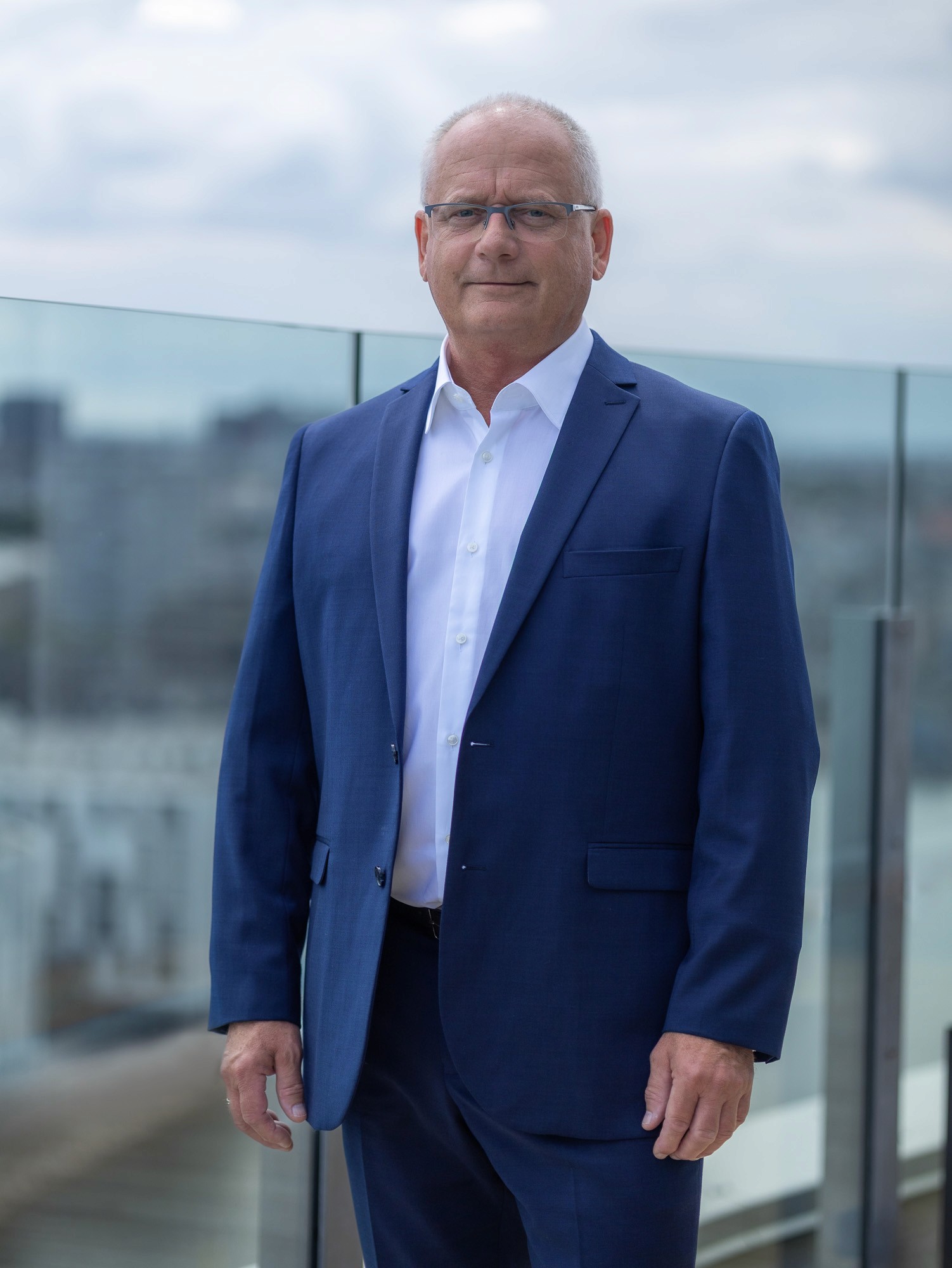
Dr. Morten Stilling

Chief Executive Officer & Founder Applied physicist with a PhD in quantum physics. Serial entrepreneur and executive with experience across McKinsey, Maersk, Ørsted, BlueDrop Energy, Pangea Green Energy, and Heimdal Critical Infrastructure. Combines deep scientific grounding with commercial leadership and strategic vision.

Dr. Morten Stilling

Chief Executive Officer & Founder Applied physicist with a PhD in quantum physics. Serial entrepreneur and executive with experience across McKinsey, Maersk, Ørsted, BlueDrop Energy, Pangea Green Energy, and Heimdal Critical Infrastructure. Combines deep scientific grounding with commercial leadership and strategic vision.

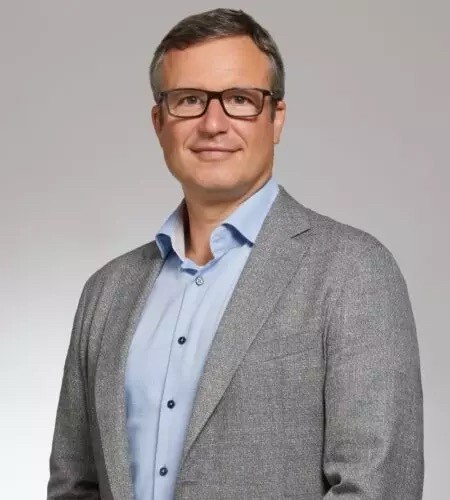
Dr. Jeremy Taylor

Chief Technology Officer & Co-founder Physicist, AI specialist and entrepreneur with deep expertise in machine learning, deep learning, and large language models. 17 granted US patents in privacy-preserving AI. 35 peer-reviewed publications. Leads Gjallarhorn's technology development with a focus on AI-based classification and tracking of subsea threats.

Dr. Jeremy Taylor

Chief Technology Officer & Co-founder Physicist, AI specialist and entrepreneur with deep expertise in machine learning, deep learning, and large language models. 17 granted US patents in privacy-preserving AI. 35 peer-reviewed publications. Leads Gjallarhorn's technology development with a focus on AI-based classification and tracking of subsea threats.

Dr. Ole Albrektsen

Chief Science Officer & Co-founder Applied physicist with a PhD in semiconductor physics from IBM Research Zürich. Spent 27 years at SDU teaching and researching optics, photonics, and otherwise. Previously at Tele Denmark R&D. Provides scientific leadership for Gjallarhorn's proprietary sensing technology.

Dr. Ole Albrektsen

Chief Science Officer & Co-founder Applied physicist with a PhD in semiconductor physics from IBM Research Zürich. Spent 27 years at SDU teaching and researching optics, photonics, and otherwise. Previously at Tele Denmark R&D. Provides scientific leadership for Gjallarhorn's proprietary sensing technology.

//

Board of Directors

Meet the board

Morten Bæk, Chairman

Mr. Morten Bæk, currently Implement Consulting Group, previously permanent secretary in the Danish Defence Ministry and the Ministry of Climate, Energy and Utilities, before that several positions in the Danish Foreign Ministry, including embassy secretary at the Danish Embassy in Washington, DC. Also serves on board of Systematic.

Morten Bæk, Chairman

Mr. Morten Bæk, currently Implement Consulting Group, previously permanent secretary in the Danish Defence Ministry and the Ministry of Climate, Energy and Utilities, before that several positions in the Danish Foreign Ministry, including embassy secretary at the Danish Embassy in Washington, DC. Also serves on board of Systematic.

Sten Stoltze

Mr. Sten Stoltze, currently COO of Carbo Culture, previously Senior Vice President, Chief Technology Officer and Head of Engineering and R&D at Ørsted, before that over 21 years at FLSmidth including Vice President, CTO and Head of Global Cement Technology and R&D. Also serves on board of FORCE Technology.

Sten Stoltze

Mr. Sten Stoltze, currently COO of Carbo Culture, previously Senior Vice President, Chief Technology Officer and Head of Engineering and R&D at Ørsted, before that over 21 years at FLSmidth including Vice President, CTO and Head of Global Cement Technology and R&D. Also serves on board of FORCE Technology.

Christopher Burghardt

Mr. Christopher "Chris" Burghardt, currently advisor to Vireo Ventures, Urban Partners, MKB, and others, previously advisor to EQT Group, Goldman Sachs, and others, before that Managing Director for Europe at ChargePoint and Managing Director & VP Business Development for Europe at First Solar.

Christopher Burghardt

Mr. Christopher "Chris" Burghardt, currently advisor to Vireo Ventures, Urban Partners, MKB, and others, previously advisor to EQT Group, Goldman Sachs, and others, before that Managing Director for Europe at ChargePoint and Managing Director & VP Business Development for Europe at First Solar.

//

Frequently asked questions

Got questions?
Get in touch with us.

What does Gjallarhorn do?

What is distributed acoustic sensing (DAS)?

Why focus on short-range?

How do Gjallarhorn deployment methods differ?

How does AI help classify and track threats?

Which markets do Gjallarhorn serve?

Contact

Most offshore critical infrastructure has no underwater surveillance. Gjallarhorn has been founded to change that.

During recent decades, European societies installed vast networks of subsea cables, pipelines, and other critical infrastructure - the arteries of our modern economies - directly on and beneath the seabed.

After the fall of the Berlin Wall in 1989, we operated under a fundamental assumption: We were safe. No credible threat to our underwater assets existed. Protection was an afterthought at best.

Russias annexation of Crimea in 2014, and its full-scale invasion of Ukraine in 2022, shattered that erroneous assumption. We now understand that our seabed infrastructure is exposed, that threats are real and imminent, and that we must act.
During recent decades, European societies installed vast networks of subsea cables, pipelines, and other critical infrastructure - the arteries of our modern economies - directly on and beneath the seabed.

After the fall of the Berlin Wall in 1989, we operated under a fundamental assumption: We were safe. No credible threat to our underwater assets existed. Protection was an afterthought at best.

Russias annexation of Crimea in 2014, and its full-scale invasion of Ukraine in 2022, shattered that erroneous assumption. We now understand that our seabed infrastructure is exposed, that threats are real and imminent, and that we must act.
During recent decades, European societies installed vast networks of subsea cables, pipelines, and other critical infrastructure - the arteries of our modern economies - directly on and beneath the seabed.

After the fall of the Berlin Wall in 1989, we operated under a fundamental assumption: We were safe. No credible threat to our underwater assets existed. Protection was an afterthought at best.

Russias annexation of Crimea in 2014, and its full-scale invasion of Ukraine in 2022, shattered that erroneous assumption. We now understand that our seabed infrastructure is exposed, that threats are real and imminent, and that we must act.

Detection, classification, and tracking of surface and subsurface threats to critical infrastructure and defence installations.

© Copyright 2026 Gjallarhorn Group ApS. All rights reserved.

Detection, classification, and tracking of surface and subsurface threats to critical infrastructure and defence installations.

© Copyright 2026 Gjallarhorn Group ApS. All rights reserved.

Detection, classification, and tracking of surface and subsurface threats to critical infrastructure and defence installations.

© Copyright 2026 Gjallarhorn Technologies ApS.

All rights reserved.